How can I tell if the website itself is the problem?
Run three checks that take ten minutes between them. First, list the services you want work for and see whether each has a page of its own with a heading that says what it is; a fabrication firm offering CNC machining, welding and powder coating on one page will struggle to rank for any of the three. Second, put the address into Google’s PageSpeed Insights and read the mobile score. Third, view the source of the home page and search for a sentence you can see on the screen. If it is missing, Google is reading a page with no words on it.
Fail any one of those and the site is holding back the search work, whatever the agency running it says.
Which website faults hurt search the most?
One page for every service is the worst, because Google ranks pages, and a page about everything is about nothing in particular. Speed comes next: heavy page builders, photographs uploaded straight from the camera and a dozen plugins add seconds that both visitors and rankings punish. Then thin or copied text, where the service pages say the same three sentences with the name swapped. Then no sign of where you work, so a search with Huddersfield or Kirklees in it has nothing to match. Last, the technical basics: broken links, missing titles, no sitemap, pages that exist at two addresses.
- One page for all the services
- Slow on a phone
- Thin or duplicated service text
- No area named anywhere
- Broken technical basics
Does website speed affect rankings?
Yes, though less than the content does. Google measures how quickly a page loads, how soon it responds to a tap and whether things jump around while it loads, and it has used those measures in ranking since 2021. A slow site rarely falls off page one for speed alone, but it loses the tie-breaks, and on a phone in a van with two bars of signal it loses the visitor as well. We build sites as static pages with the fonts and images hosted alongside them, and we measure every one against Google’s own figures before launch.
Can SEO be done on the website I already have?
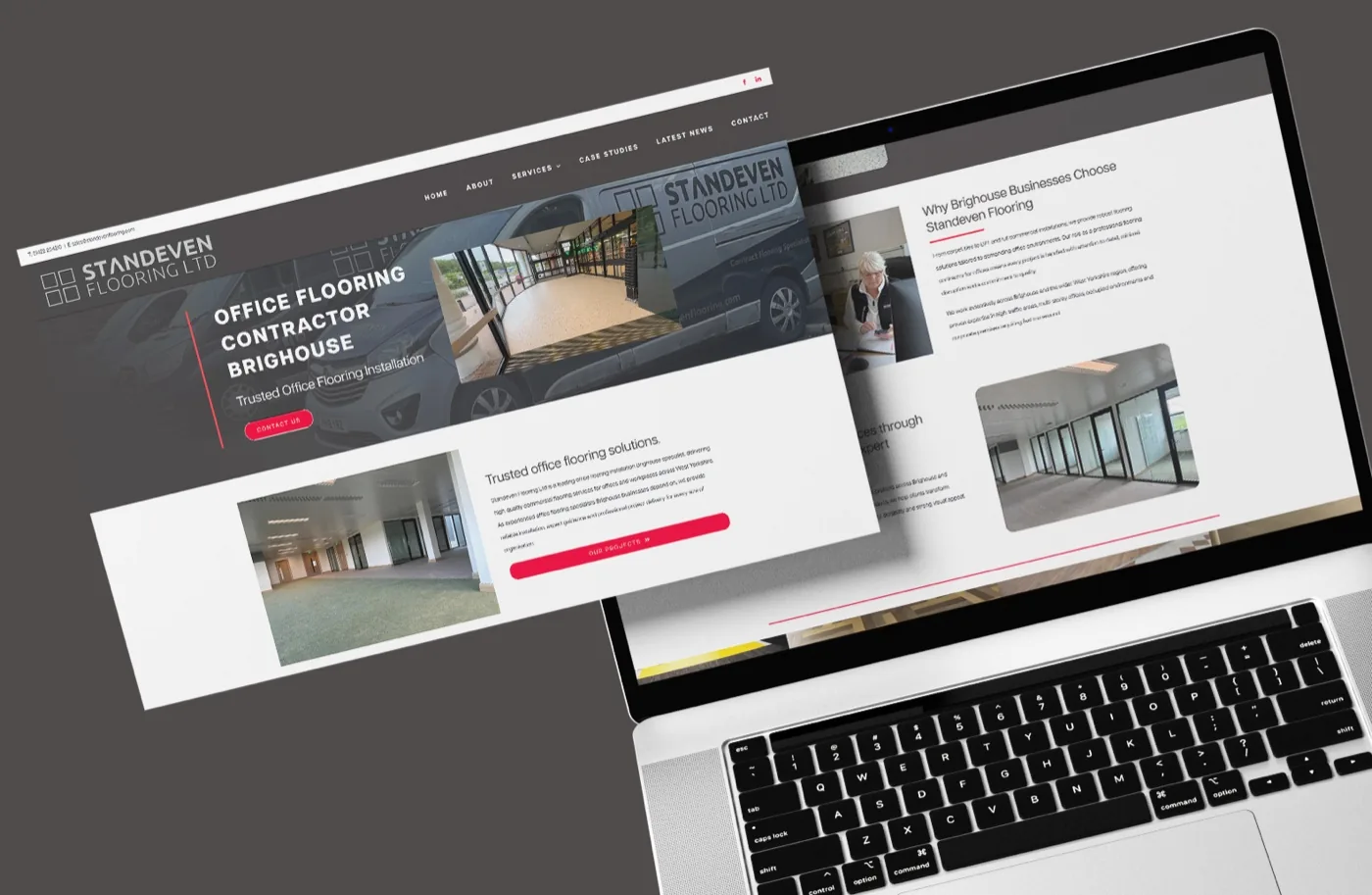
Often, yes. If the platform lets you add pages, edit titles and headings, and the pages load in reasonable time, most of the search work can go straight onto the site you have, and that is where we start whenever it is sensible. The exceptions are the old builder sites that nobody can log into, the ones an agency holds the keys to, and the ones where fixing the structure means touching every page anyway. At that point a rebuild costs less than the patching.
Bond Brickwork is what the long game looks like. The website has been managed by us since 2018, with the search work running alongside it the whole time, and the business sits at the top of Google for the commercial brickwork searches that matter and is recommended by AI search.
What does Halizona do when the website is the blocker?
Structure first. We work out which services and areas deserve a page, write each one properly, with the job, who it is for and the proof, and only then touch the design. The technical basics are fixed in the build, the old addresses are redirected so nothing that already ranks is lost, and the search work carries on after launch, because a site that stops changing stops improving.
AI answers read the same pages Google does, so the same work covers them. A clear page that names the service, the area and the evidence is what gets a Huddersfield firm mentioned when someone asks an assistant who to call.